Home Author
Author

Sterling Beaton

Advertisement

1. Jasper National Park 

My photo of Tangle Creek in Jasper National Park taken in fall 2024

Jasper National Park was most definitely tranquil but it also was much larger but significantly less crowded and commercialized than its famous neighbor Banff. It was also stunning with its sprawling landscapes consisting of towering mountains, sparkling lakes, pines, spruces and firs all spectacularly set against the backdrop of the rugged Canadian Rockies.

I couldn’t help but not embark on an epic hike here so I opted for the steep 5-mile Sulphur Skyline Trail which I managed to complete in just over four hours before I sunk myself into the steaming Miette Hot Springs at the trailhead! I also managed to take a boat cruise on Maligne Lake to Spirit Island (the glacier-fed water was just such an unreal milky-turquoise color!) and ride the Jasper SkyTram too!

2. Banff National Park

My photo of Peyto Lake in Banff National Park taken in 2024

Banff exceeded all my expectations of being a seriously breathtaking beauty spot and had all the crazy beautiful scenery to match – scenery so dramatic that it almost feels staged — jagged peaks, lakes that glowed brilliant turquoise and a faint aroma of pine resin everywhere! There was also a small but fun town that felt adventurous, peaceful and wonderfully cozy all at the same time!

I found ticking off all the big hitters was surprisingly easy as everything was handily clustered close together and connected by well-maintained roads and trails. Of course, I have to mention the kayaking on Lake Louise, waterfall-hopping through Johnston Canyon, steaming away the miles in the Banff Upper Hot Springs but I actually found the quirky gift shops to be a great draw too, especially the Tie-die slogan tees at Cool As A Moose.

3. Toronto – a quieter alternative to New York!

My shot of Toronto skyline at sunset

I have to admit, Toronto really surprised me, yes like any major city it had its grittier parts but overall I personally thought it was vibrant, characterful and handsome, with a superb shiny skyline dominated by the CN Tower, layers of both old and new architecture and a breezy lakeside setting along Lake Ontario. The city’s dynamic energy reminded me of New York, it was just a little calmer, cleaner, and more compact.

Hanging out at Cineforum was just one of the unique experiences I had here. Local eccentric Reg Hartt showed me short films and animations in his living room and even talked about his colorful party lifestyle past with a can of Labatt Blue in hand! Other off-the-radar gems included the historic Distillery District, foodie-focused St. Lawrence Market and soaking up the creative vibe in Kensington Market.

4. Johnstone Strait

Johnston Strait and a whale's tail

I discovered the waters here were home to the largest populations of resident killer whales! I also thought it was a stunningly beautiful place, with silvery clear waters surrounded by untouched coastal scenery and forest-covered mountains and the curious resident orcas just added to the extraordinary natural drama of it all!

It wasn’t that hard to get to either and when I staying on Vancouver Island, I drove 1 hour 40 minutes from Campbell River to the tiny community of Telegraph Cove to get here. I stayed a few days and took an orca-viewing boat tour to Robson Bight Ecological Reserve, took a kayak out on the waters and dined on glossy linguine in The Old Saltery Pub while watching the cute and playful sea otters on the planks just outside. The whole place felt wonderfully zen and very nervous system healing!

5. Prince Edward Island

Charlottetown Prince Edward Island

This was just my kind of hidden gem. It was a little off the beaten track but also worth the extra effort to get here, I discovered quaint maritime towns, historic Victorian architecture, green hills, and pristine sandy beaches which ranged from white to red sand. I was also charmed by its welcoming small-town vibe and very slow pace of life! There were warm smiles everywhere I looked here!

After crossing the Confederation Bridge from New Brunswick, I slowed right down for three days and eventually decided on exploring red-cliffed Cavendish village, paying a visit to the pretty home of Anne of Green Gables and padding across Basin Head’s “Singing Sands” beach.

 

Advertisement

Across Canada, a surprising new trend is making its way from living rooms to television studios. TV talk shows and lifestyle segments are increasingly discussing the growing popularity of creative hobbies — especially relaxing forms of art like oil pastel drawing.

Wellness experts say more Canadians are turning to simple artistic activities as a way to reduce stress, spend less time on screens, and reconnect with creativity. Programs about health and lifestyle frequently highlight how even beginners can enjoy artistic hobbies without special training.

One activity gaining particular attention is working with oil pastels. The technique is easy to start, requires minimal materials, and allows people to create colorful illustrations in just a short time. Many participants describe the process as calming and almost meditative.

Lifestyle magazines across Canada are also reporting a surge of interest in do-it-yourself creative kits designed for beginners. These kits typically include pastels, paper, and step-by-step guidance that helps anyone create small artworks at home.

Experts say the appeal lies in simplicity. Unlike more complex crafts, oil pastel drawing allows people to relax and experiment without worrying about perfection. For many Canadians looking for a healthy way to unwind after busy days, this creative hobby is becoming an accessible and enjoyable option.

As talk shows continue to feature the trend, it’s clear that creative self-expression is becoming an important part of everyday wellness culture across Canada. Whether for relaxation, mindfulness, or simply fun, artistic hobbies are finding a growing audience nationwide.

Advertisement

Television often projects an image of perfect control, especially during news broadcasts and live programs. That is why moments when this well-oiled machine doesn’t work flawlessly attract so much attention—not as scandals or dramatic events, but simply in a human and often amusing way.

One such incident occurred during the evening news on France 2, hosted by Anne-Sophie Lapix. As she introduced a somewhat unusual segment, the presenter briefly smiled, tried to continue reading, but was suddenly overcome with laughter. She paused, looked down, apologized to the audience, and eventually finished her sentence. In a format where emotions are usually carefully restrained, the spontaneity of the moment surprised viewers.

During the pandemic, these kinds of “human” moments became more common, particularly when journalists broadcast live from their homes. In a France 2 news segment, a correspondent was reporting live from his apartment when a cat suddenly jumped into the frame, walked across the camera lens, and partially blocked his face. The journalist froze for a moment but then continued his report without reacting, maintaining a completely professional expression.

Some of these mishaps are also minor technical errors. During a weather forecast on France 3, the labels on the map of France were placed incorrectly. The names of several cities and regions did not match their geographic locations, and some infographic elements appeared shifted. The presenter continued the explanation without commenting on the visual mistake, which viewers quickly noticed.

Live broadcasts are also vulnerable to unintended interruptions. On BFM TV, a presenter began a live segment with a correspondent on location and announced an upcoming live interview. However, the connection was not established immediately. For several seconds there was silence and the image froze, before the journalist finally appeared and began the report as if nothing had happened.

Entertainment programs are not immune to these situations either. In one episode of “Don’t Forget the Lyrics” (“N’oubliez pas les paroles”), host Nagui misspoke while explaining the rules of the game, accidentally changing the meaning of what he said. He immediately stopped the show, laughed at his mistake, corrected himself, and continued the program. The clip was broadcast and regularly appears in compilations of the show’s funniest moments.

Sometimes the organization of a broadcast itself can lead to unexpected situations. On the program Télématin, the camera once turned on before the live broadcast officially began. The hosts were chatting, checking their notes, and not looking at the camera. Only a few seconds later did one of them realize the program was already on air, and the broadcast began abruptly, directly from behind the scenes.

Language nuances can also create slightly humorous moments. On France 24, during an interview with an English-speaking guest, the interpreter translated an English idiom literally, resulting in an unusual French sentence. The host cleverly rephrased the statement without pointing out the mistake, and the conversation continued normally.

Even the end of a news broadcast can sometimes be surprising. On TF1, during a news program, the closing credits began playing too early and drowned out the presenter’s voice. He paused briefly, waited for the music to finish, and then concluded the broadcast with a final sentence before saying goodbye to viewers.

None of these incidents caused controversy or called the authenticity of the programs into question. On the contrary, they serve as a reminder that behind the scenes are professionals who must deal with the unpredictability of live broadcasting—and that it is precisely this element of surprise that makes television so engaging.

Advertisement

In Canada, almost everyone “belongs” to something outside of work. It could be a choir, a volunteer fire department, a historical re-enactment group, a cycling club, a knitting circle, or even a meditation group. These communities are the invisible threads that hold Canadian society together.

From childhood, we’re introduced to this: hockey practice, Scouts or Guides, music lessons, dance class. This often continues into adulthood. Because we know: people need to belong – not just to family, but to a group of people who share their interests.

In smaller towns, this is even stronger. The volunteer fire department isn’t just about fighting fires. It’s a hub of social life: they organize dances, community breakfasts, and Christmas parties. Everyone has a role – and everyone is needed.

In cities, clubs are more diverse: yoga studios, running groups, coding meetups, language conversation circles. But the spirit is the same: sharing, learning, helping each other.

Pages: 1 2

Advertisement

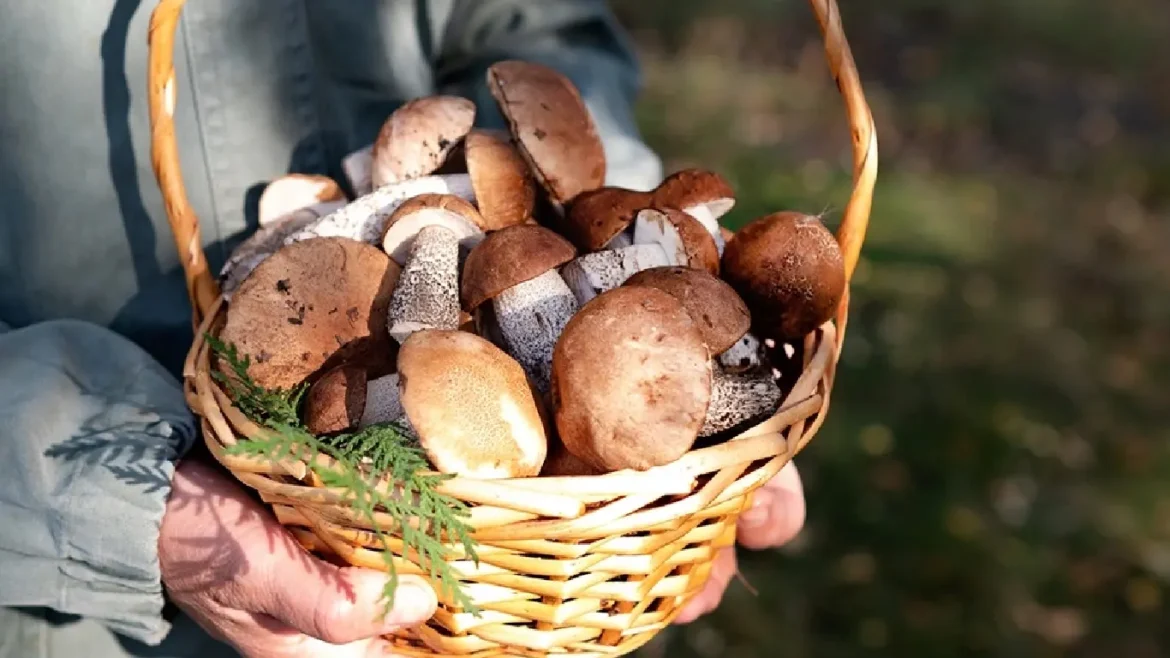
Every year, as soon as the late summer rains come and the weather warms, Canadian forests fill with foragers. They aren’t just hikers – they are hunters, experts, lovers of quiet. Foraging for wild foods isn’t just a hobby – it’s a philosophy.

It teaches patience. You can’t run and gather. You have to walk slowly, observe, identify. Each species has its place: chanterelles near hardwoods, morels in disturbed ground after a forest fire, blueberries on rocky outcrops, raspberries along sun-drenched paths. And if you don’t know – you don’t pick. Safety and respect are the first rules.

Families often go together. Kids learn from grandparents: “This one’s good to eat, that one’s not.” This passing down of knowledge from generation to generation is a living tradition you can’t find in books.

Foraging isn’t just about food. It’s about connecting with the land. When you hold a freshly picked chanterelle or a handful of wild blueberries, you feel a sense of respect for the forest. And that’s why you never trample the mycelium, you don’t tear up the moss, you leave no trace.

Pages: 1 2

Advertisement

For a Canadian, a local pub or tavern isn’t just a place to drink. It’s a third space – between home and work. It’s where local politics are debated, vacations are planned, and you commiserate over a lost hockey game. It’s where friends who haven’t seen each other all week finally connect.

Every small town has its local legion hall or pub. Every city has its favourite neighbourhood bars. And everyone has “their” spot, where the bartender knows their name, knows their usual order, and won’t bother you unless you want to chat.

A beer is often part of it. But it’s not about the quantity – it’s the ritual. The first sip is a moment of appreciation. A simple nod of the head can replace a formal “cheers.” And crucially: you rarely drink alone. It’s a social act.

The pub is also a place where social divides fade. Side by side, you might find an accountant, a tradesperson, a teacher, and a retiree. Everyone is equal. No one flaunts status – only character.

Today, many pubs are evolving: there are more craft beers on tap, better food menus, and live music nights. But the core remains: calm, trust, and the option of anonymity when you need it.

Pages: 1 2

Advertisement

As early as the post-war era, when travel was more complicated and cities were growing, Canadians began building cottages and cabins on the edges of lakes and forests. Not for luxury, but for freedom: a place where they could be themselves, away from neighbours, rules, and noise.

This tradition lives on today. Even in the age of Airbnb and global travel, a private cottage remains a quintessential dream. It might be a rustic cabin on a Crown land lake, a cottage on a small island, or even a chalet in the mountains. The main thing is that it’s yours.

In the summer, people barbecue, relax on the dock, and grow vegetables. In the winter, they light the wood stove, play cards, and drink wine by the fire. Kids learn to chop kindling, fetch water, and build a campfire. This isn’t “survival” – it’s a connection to something real.

It’s especially appreciated when the cottage has no internet. Or the cell service is spotty. And that’s seen as a plus. No emails, no notifications – finally, time to read a book, talk with your partner, listen to the rain on the roof.

Pages: 1 2

Advertisement

For most Canadian families, Sunday doesn’t start with coffee in bed, but with lacing up comfortable shoes and heading outdoors. “Sunday walk in the woods” isn’t just a phrase; it’s a way of life. In the morning, parents pack a thermos of coffee or tea, kids fill their backpacks with snacks, and the whole family heads to the nearest trail in a conservation area, provincial park, or ravine.

It’s not a sport or an extreme adventure. It’s a walking ritual. No one is counting kilometres or checking a GPS. The main thing is to be together, breathe fresh air, listen to the birds, maybe spot some wildlife, or simply stroll side-by-side in comfortable silence. For seniors, it’s a way to stay active. For kids, it’s an adventure. For parents, it’s a rare chance to talk without screens or urgent matters.

Particularly popular trails are found across the country: the Don Valley trails in Toronto, Mount Royal in Montreal, Stanley Park’s seawall in Vancouver, the river valley trails in Edmonton, or the Cabot Trail in Cape Breton. But even in a small town, there’s always “our path” – known to every local.

In winter, the ritual doesn’t disappear – it transforms. A walk through a snow-covered forest, a stop at a local café for a hot chocolate, a sledding session with the kids. The main goal is to get out of the house and experience the rhythm of the seasons.

Pages: 1 2

Advertisement

Canadian television strives for a polished image, especially in news broadcasts and live events. That’s why moments when this well-oiled machine falters attract so much attention – not in a scandalous way, but in a way that’s simply human and often humorous.

One such moment occurred during the evening news on a major network. While introducing an unusual story, the anchor, known for her composure, stumbled over a word, tried to continue, and then burst into laughter. She paused, looked down, apologized to viewers, and finally managed to finish her sentence. In a format where emotions are usually kept in check, this spontaneity surprised everyone with its sincerity.

During the pandemic, such endearing moments became more frequent, especially during live remotes from reporters’ homes. On a national network, a reporter was commenting on the situation from her living room when a cat suddenly crossed the camera’s field of view, walked right in front of the lens, and partially blocked her face. After a brief pause, the reporter continued her report with impeccable professional calm.

Minor technical glitches also fall into this category. During a weather forecast on The Weather Network, some labels on the map were misplaced: city names were shifted, and graphic elements were out of place. The meteorologist continued speaking without commenting on the error, which viewers immediately noticed.

Live crosses can also be plagued by unexpected dead air. On CTV News, the anchor tossed to a reporter on location, but the connection was slow to establish. A few seconds of silence and a frozen image hung in the air before the reporter appeared and began their report as if nothing had happened.

Pages: 1 2

Advertisement

Many Canadians might not be fully aware of the landscape, so let’s clarify. While there’s no single national survey like the Czech one mentioned, it’s safe to say that a large majority of Canadian employees now expect benefits like health and dental insurance or a retirement savings plan as a standard part of their compensation package.

Benefits with the Most Advantageous Tax Treatment

From a tax perspective, certain benefits are considered non-taxable for the employee up to a limit and are tax-deductible for the employer. These are generally seen as the most advantageous. In Canada, this is governed by the *Income Tax Act*.

Health and Dental Insurance (Private Health Services Plans):

This is the cornerstone of benefits in Canada. Employer-paid premiums for a private health services plan (PHSP), which includes things like prescription drugs, dental care, vision care, and paramedical services (physio, massage, etc.), are a tax-deductible business expense for the employer.

For the employee, the value of these premiums is not considered a taxable benefit. This is one of the most significant and popular benefits. It can be provided to employees in all types of employment (full-time, part-time, contract) and often extends to their families. There is no set dollar limit on the premium itself for the tax exemption, but the plan must be a genuine private health services plan.

Registered Retirement Savings Plan (RRSP) Contributions:

Employer contributions to an employee’s Registered Retirement Savings Plan (RRSP) are a highly tax-effective benefit.

Employer contributions are a tax-deductible business expense.

For the employee, employer RRSP contributions are not included in their taxable income for the year, up to their individual RRSP deduction limit. This is a powerful way to save for retirement tax-free until withdrawal. Many employers offer matching programs (e.g., matching employee contributions up to a certain percentage of salary).

This benefit can be offered to employees in all types of employment. It falls under the same general tax rules for registered plans.

Tax-Free Savings Account (TFSA) Contributions:

Similar to RRSPs, some employers offer contributions to an employee’s TFSA. While the contributions themselves are made with after-tax dollars (unlike RRSPs), the investment growth and withdrawals are tax-free. From an employer’s perspective, the contribution is a taxable benefit to the employee (it’s considered income), but it’s a popular savings vehicle for employees. It’s often structured through a payroll deduction system where the employer facilitates the contribution, but it’s less common as a direct, non-taxable employer-paid benefit compared to RRSPs.

Pages: 1 2

Advertisement

Newer Posts